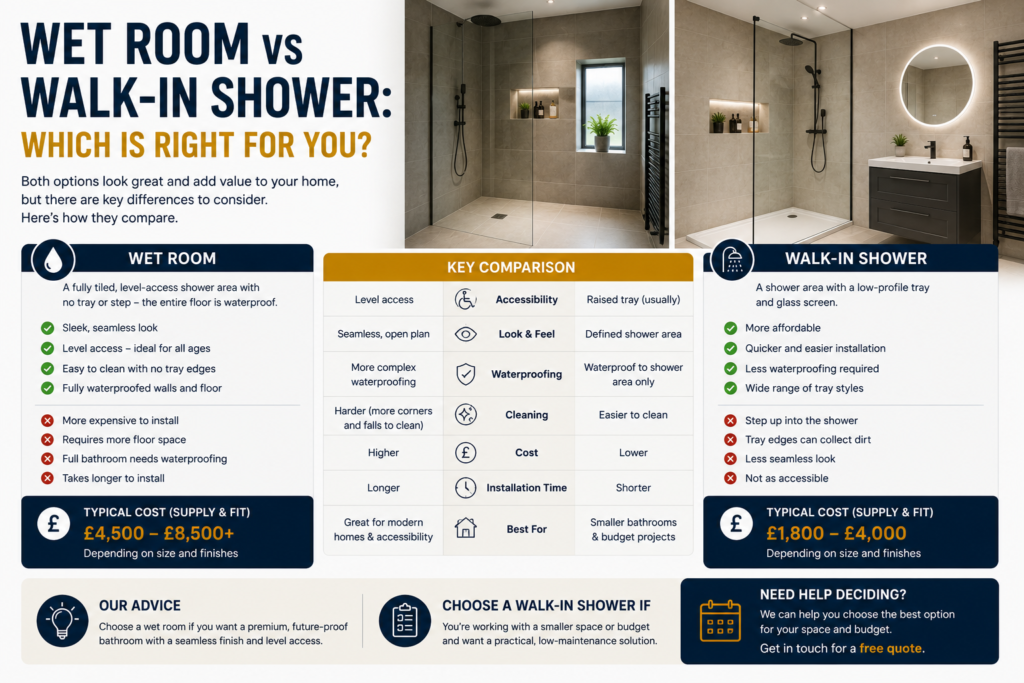
Both a wet room and a walk-in shower give you that open, modern, step-free look that has become so popular — but they are not the same thing, and choosing the wrong one for your space or budget is an expensive mistake. Here is a clear, no-nonsense comparison to help you decide.
What is a walk-in shower?
A walk-in shower is a shower area within an otherwise normal bathroom. It usually sits on a low-profile shower tray, with a fixed glass screen (and often no door) instead of a full enclosure. The rest of the bathroom floor stays as it is. It gives you the open, walk-in feel without waterproofing the whole room.
What is a wet room?
A wet room goes a step further: the entire floor (and the lower walls) are fully waterproofed — “tanked” — and the floor is gently sloped so water drains away through a gully or channel. There is no tray and no step, so it is completely level access. The shower simply becomes part of the room.
Walk-in shower vs wet room: the key differences
Cost
A walk-in shower is cheaper and simpler to install. A wet room costs more because of the tanking and drainage work, which is skilled and time-consuming — but that work is exactly what keeps it watertight, so it is not somewhere to cut corners.
Space
Wet rooms make small bathrooms feel noticeably bigger because there is no tray, screen frame or step to break up the floor. In a compact bathroom or en-suite, a wet room can be the smartest use of the space.
Accessibility
This is where wet rooms really shine. Level, step-free access makes them ideal for anyone with reduced mobility, now or in the future — see accessible bathrooms. A walk-in shower still usually has a small step up onto the tray.
Maintenance and cleaning
Wet rooms are very easy to clean — fewer nooks, no tray edges and a single open floor. Walk-in showers are still easy, but the tray and screen edges need the usual attention.
Waterproofing
A walk-in shower relies on the tray and sealed screen to contain water. A wet room relies entirely on the tanking under the tiles. Done properly, both are completely watertight; done badly, a wet room is far less forgiving — which is why correct tanking and falls matter so much.
So which should you choose?
As a rule of thumb: if your budget is tighter, or you simply want to replace a tired shower or swap out a bath, a walk-in shower room is the sensible, cost-effective choice. If you want level access, a premium finish, you are making a small room work harder, or you are future-proofing the home, a wet room is well worth the extra outlay.
Frequently asked questions
Can any bathroom become a wet room?
Most can, but the floor type (timber or concrete), the build-up height and drainage all affect the approach. I will assess your space when I quote and tell you honestly whether a wet room or a walk-in shower makes more sense.
Will a wet room make the whole room wet?
No — with the right shower screen and a properly set fall to the drain, the water stays in the showering area and drains away quickly. The tanking simply protects the room if any water does reach the floor.
Which adds more value to a home?
Both modernise a bathroom, but a well-built wet room tends to feel more premium and is a strong selling point, especially for buyers thinking about long-term, step-free living.
Planning a bathroom in Blackburn? Get a free, no-obligation quote and I’ll talk you through the options — no pressure, no jargon.