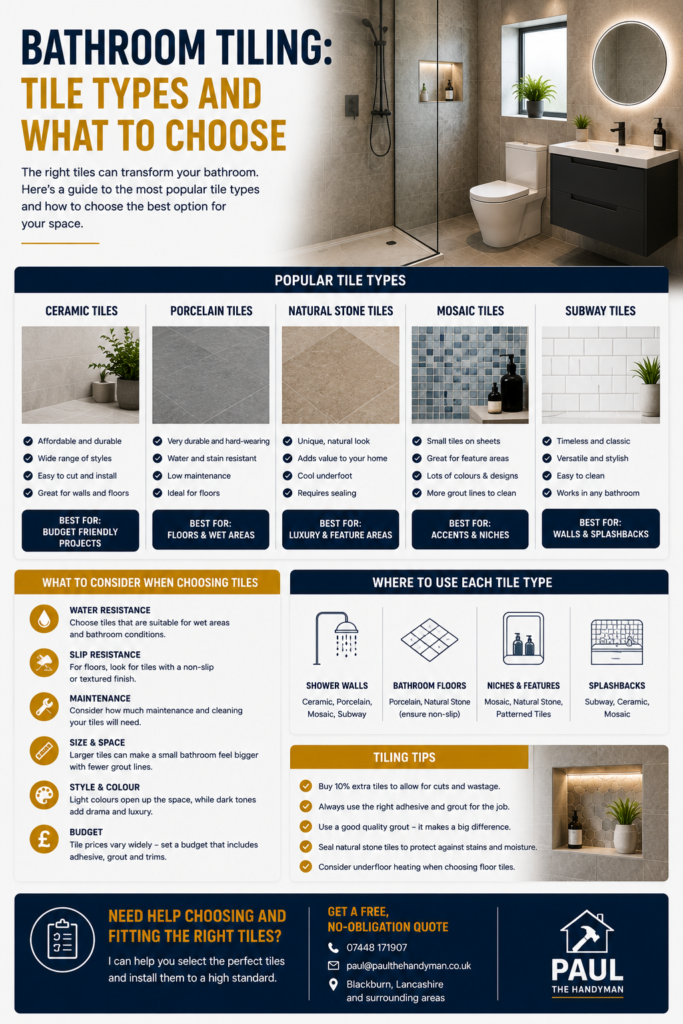
Tiles set the entire character of a bathroom — and the wrong tile in the wrong place causes real problems, from cracked floors to slippery surfaces. This guide runs through the main tile types, where each one works best, and the things that actually make tiling last, so you can choose with confidence before your tiling job.
The main tile types
Ceramic
Ceramic is the budget-friendly all-rounder — easy to cut, easy to fit and available in endless styles. It is ideal for walls, where it does not have to take heavy wear. It is a little softer and more porous than porcelain, so it is less suited to floors and very wet areas, but for wall tiling it is hard to beat on value.
Porcelain
Porcelain is denser, harder and far less porous than ceramic, which makes it the go-to for floors, showers and wet rooms. It shrugs off water and wear, and modern porcelain can convincingly mimic wood, concrete or marble. It is harder to cut, so labour is a touch higher, but for floors and wet areas it is worth it.
Natural stone
Marble, slate, travertine and limestone bring a beauty no man-made tile quite matches — but stone is porous and needs sealing, both on installation and periodically afterwards. It also varies tile to tile, which is part of its charm but demands careful setting-out. Stunning in the right bathroom, as long as you are happy with the upkeep.
Large-format tiles
Large tiles mean fewer grout lines, giving a clean, contemporary, seamless look that also makes small rooms feel bigger. The trade-off is that they need a very flat, sound surface and careful handling and cutting, so preparation and labour matter more. The results, done well, are excellent.
Mosaic, metro and patterned
Smaller and feature tiles — mosaics, classic metro tiles and patterned encaustic-style tiles — are great for feature walls, niches, shower areas and floors where you want detail or extra grip. They take longer to fit, so they tend to be used as accents rather than everywhere.
Where to use what
- Walls — ceramic or porcelain both work well; large-format for a modern seamless look
- Floors — porcelain or sealed natural stone; avoid soft ceramic underfoot
- Showers and wet rooms — porcelain or properly sealed stone over correct tanking
- Feature areas — mosaics, metro or patterned tiles for niches and accent walls
Matt or gloss — and a word on slip
Gloss tiles bounce light and feel bright and easy to wipe, which suits walls. On floors, especially in a shower or wet room, a matt or textured finish with a sensible slip rating is far safer underfoot when wet. It is a small detail that prevents a nasty accident, so it is worth getting right.
What does tiling cost?
Tiling is normally priced per square metre. As a rough guide in the Blackburn area, bathroom tiling typically runs between around £25 and £60+ per m² for labour, depending on the tile and the amount of cutting and preparation. Large-format and natural stone sit at the higher end. The tiles themselves are on top of that and vary enormously with the material and brand.
The bit that matters most: prep and waterproofing
Whatever tile you choose, the work behind it is what makes it last: a flat, sound, properly prepared surface; the correct adhesive and grout for the tile and area; careful setting-out so cuts fall sensibly and lines stay straight; and, crucially in showers and wet rooms, full tanking (waterproofing) under the tiles. Skimp on preparation and even the most expensive tiles will crack, lift or let water through. Get it right and a tiled bathroom looks superb and stays watertight for years.
Frequently asked questions
Can I use the same tile on the floor and walls?
Often yes, and it can look great — but check the floor slip rating, especially in a shower area. Some ranges offer a matching wall tile and a textured floor version for exactly this.
Do I need to seal my tiles?
Porcelain and ceramic do not generally need sealing, though the grout benefits from it. Natural stone does need sealing, on fitting and periodically afterwards, to stop it staining and absorbing water.
How many tiles should I order?
Always allow around 10% extra over the exact area for cuts, breakages and future repairs. Running out mid-job means waiting on a matching batch, which holds everything up — one to remember if you are supplying your own.
Why is my old grout always discoloured?
Usually a mix of age, the wrong grout for the area, or poor sealing. Re-grouting and re-sealing can freshen tired tiling without a full re-tile, provided the tiles themselves are still sound.
Planning a bathroom in Blackburn? Get a free, no-obligation quote and I’ll talk you through the options — no pressure, no jargon.