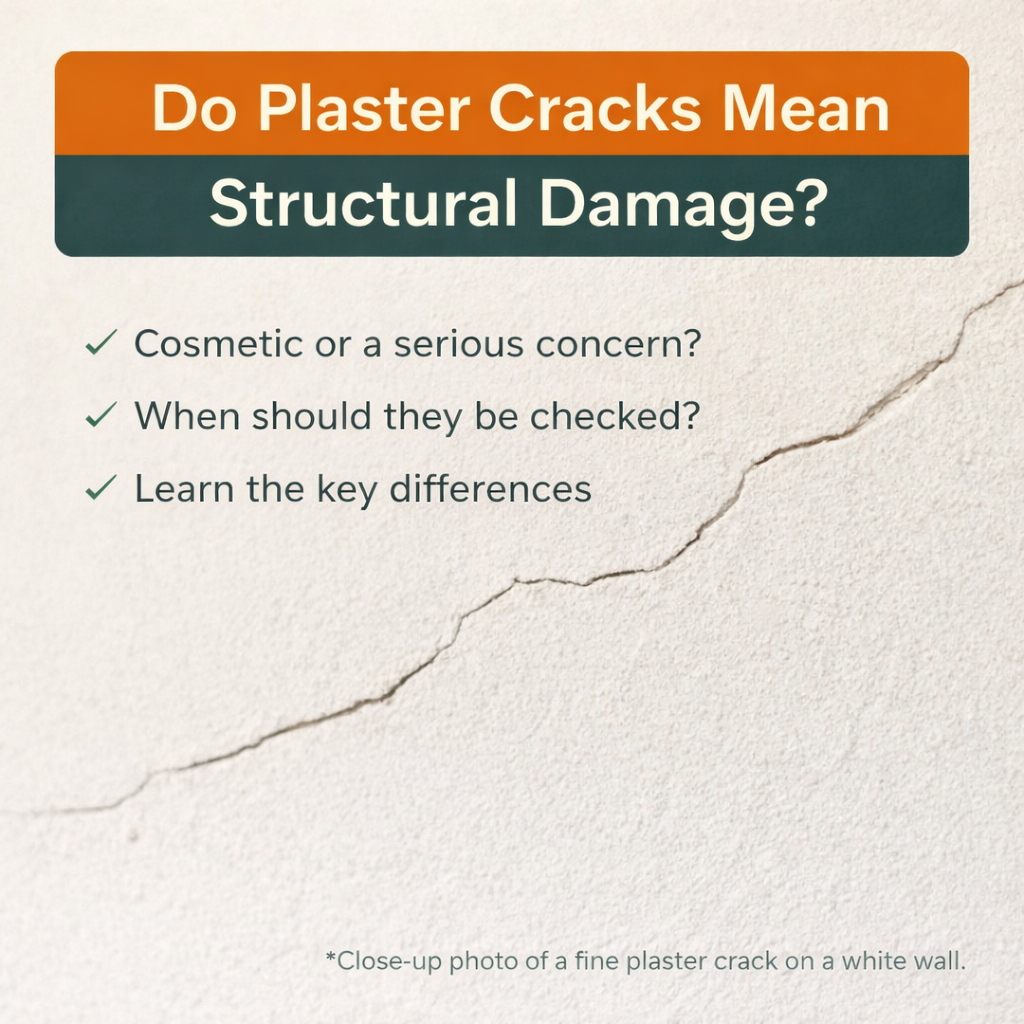
Noticing cracks in your walls or ceilings can be worrying.
One of the most common questions homeowners ask is whether plaster cracks mean there’s a serious structural problem.
In most cases — the answer is no.
But understanding the difference between cosmetic plaster cracks and structural movement is important.
Why Do Plaster Cracks Appear?
Plaster cracks are common in:
- New build homes settling
- Older properties with seasonal movement
- Rooms with temperature changes
- After minor building work
- Ceiling joints and taped seams
Materials expand and contract naturally. As a result, fine cracks can appear over time.
Cosmetic vs Structural Cracks
Cosmetic Cracks (Very Common)
These are typically:
- Hairline cracks
- Straight or slightly stepped along joints
- Around windows or doors
- Along ceiling plasterboard seams
They are usually surface-level and related to movement or shrinkage.
These can normally be repaired professionally without major work – I have a handy cost guide for plastering repairs.
Cracks That May Need Investigation
While rare, cracks could require further attention if they are:
- Wider than 3–5mm
- Diagonal and spreading
- Appearing suddenly and rapidly
- Accompanied by sticking doors/windows
- Found both inside and outside in similar locations
If you’re unsure, it’s always sensible to seek advice.
Are Ceiling Cracks Structural?
Most ceiling cracks are not structural.
They are often:
- Plasterboard joint movement
- Settlement cracks
- Poor previous repairs reopening
Proper preparation and reinforcement during repair prevents them reappearing quickly.
When Should You Repair Plaster Cracks?
You can repair cracks when:
- They’re cosmetic but noticeable
- You’re redecorating
- They affect the appearance of the room
- You want long-lasting professional repair
Simply filling over cracks often leads to them returning.
Professional plaster crack repair focuses on preparation, reinforcement and smooth blending.
How to tell a cosmetic crack from one worth checking
Most plaster cracks are cosmetic, but a few features are worth taking seriously. Fine hairline cracks, and cracks that follow plasterboard joints or appear where a ceiling meets a wall, are almost always surface-level. The ones worth a closer look are cracks wider than about 5mm, diagonal cracks running from the corners of windows or doors, cracks that keep coming back after repair, or cracks that appear just as doors and windows start sticking. If you are seeing those, it is sensible to have a chartered surveyor or structural engineer take a look before any cosmetic repair, simply to rule out movement.
Repairing cosmetic cracks so they stay gone
The reason cracks often reappear is that they were simply filled over. A lasting repair means raking the crack out a little, filling and reinforcing it with scrim where needed, then skimming the area flat rather than leaving a ridge of filler. For a wall with several cracks, a full re-skim usually gives a better, more even result than a patchwork of repairs. There is more on my plastering services page.
Plaster Crack Repairs in Blackburn
If you’ve noticed cracks in your walls or ceilings and would like advice, I provide plaster crack repairs and ceiling repairs across Blackburn and surrounding areas.
For more details, visit my Plastering Services in Blackburn page.