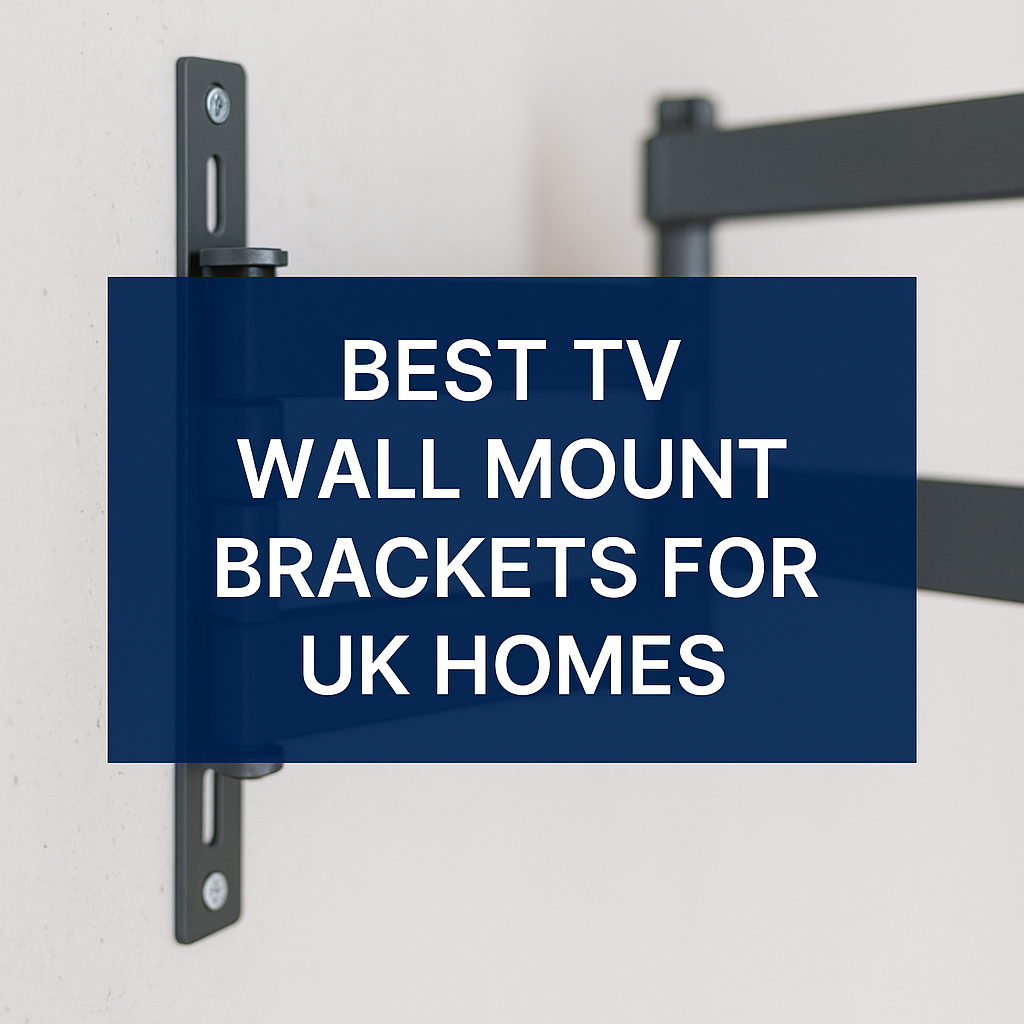
When it comes to wall-mounting your TV, choosing the right bracket is just as important as the installation itself. The wrong bracket can make viewing uncomfortable, limit your adjustment options, or even risk your TV falling. In this guide, I’ll explain the best TV wall mount brackets for UK homes, so you know what to look for before booking your installation.
Types of TV Wall Mount Brackets
1. Fixed TV Wall Brackets
- Best for: Small rooms, straightforward installations
- Pros: Low-profile, affordable, keeps TV close to the wall
- Cons: No movement – you can’t tilt or swivel the TV
2. Tilt TV Wall Brackets
- Best for: Bedrooms or high-mounted TVs
- Pros: Lets you tilt the screen up or down for better viewing angles
- Cons: No side-to-side movement
3. Full-Motion (Swivel) TV Wall Brackets
- Best for: Living rooms, open spaces, corner installations
- Pros: Maximum flexibility – you can tilt, swivel, and extend the TV
- Cons: More expensive, requires stronger fixings, takes longer to install
What’s the Best Option?
- For a simple, budget-friendly solution → Fixed bracket
- For wall mounting above eye level → Tilt bracket
- For flexible viewing angles and large living spaces → Full-motion bracket
TV Bracket Comparison at a Glance
If you just want the short version, here is how the three main bracket types stack up:
| Bracket type | Best for | Movement | Rough price |
|---|---|---|---|
| Fixed | Small rooms, TVs at eye level | None | £10–£25 |
| Tilt | Bedrooms, TVs mounted high | Up/down tilt | £15–£40 |
| Full-motion | Living rooms, corners, open-plan | Tilt, swivel, extend | £30–£90+ |
How to Choose the Right Bracket for Your TV
The “best” bracket is the one that suits your TV, your room and your wall. Three things decide it:
1. Match the bracket to your TV size and weight
Every bracket lists a maximum screen size and weight, and a VESA pattern — the spacing of the four mounting holes on the back of your TV (for example 200×200mm or 400×400mm). Check your TV’s VESA size and weight in its manual or specs, and pick a bracket rated comfortably above it. A 65” TV on a bracket rated to 55” is asking for trouble.
2. Match the bracket to how you watch
Think about where you sit. If the TV is at eye level on the main wall, a slim fixed bracket is perfect and keeps it tight to the wall. If it is mounted higher, a tilt bracket angles the screen down to you. If you watch from different parts of an open-plan room, or want the TV in a corner, full-motion lets you pull it out and swivel it.
3. Match the bracket to your wall
This is the one people forget. A solid brick or concrete wall will take almost any bracket with the right fixings. A stud/plasterboard wall needs the bracket fixed into the timber studs behind the board — never into plasterboard alone, especially with a heavy TV or a full-motion arm. If you are not sure what your wall is made of, it is worth reading whether a TV can be mounted on a plasterboard wall before you buy.
What to Check Before You Buy a TV Bracket
- Your TV’s VESA hole pattern (e.g. 200×200, 400×400mm)
- Your TV’s screen size and weight versus the bracket’s rating
- What your wall is made of — brick, block or stud/plasterboard
- How far the TV needs to extend or swivel, if at all
- Whether you want to hide the cables — see hidden cable solutions for wall-mounted TVs
- That the right fixings are included for your wall type (often they are not)
Frequently Asked Questions
What is the best type of TV wall bracket?
There is no single best bracket — it depends on your room. A fixed bracket is best for a TV at eye level in a small room, a tilt bracket suits a TV mounted high or in a bedroom, and a full-motion bracket is best for living rooms and corners where you want to angle the screen.
What size bracket do I need for my TV?
Match the bracket to your TV’s VESA pattern (the hole spacing on the back) and choose one rated above your TV’s screen size and weight. Most brackets list the screen sizes and weight they support.
Can I fit a TV bracket to a plasterboard wall?
Yes, but it must be fixed into the timber studs behind the plasterboard, not the board itself. For heavier TVs or full-motion brackets this is essential. If you are unsure where the studs are, it is safer to have it done professionally.
Should I mount my own TV or hire someone?
If you are confident finding studs, drilling and lifting the TV safely, a fixed mount on a solid wall is a manageable DIY job. For heavy TVs, full-motion brackets, plasterboard walls or hidden cabling, it is worth getting it done right — see why some people choose not to mount a TV themselves.
Expert Handyman Advice
Many homeowners buy brackets online without realising they may not suit their TV size, weight, or wall type. A professional handyman will:
- Help you choose the right bracket for your TV and room
- Supply and install safe, reliable fixings
- Make sure your TV is level and secure
Need Help Choosing a TV Bracket in Blackburn?
If you’re unsure which option is right for your home, I can help. I offer a full TV wall mounting service in Blackburn, including bracket supply and installation.
Related Blog Posts
- How Much Does TV Wall Mounting Cost in Blackburn?
- Can a Handyman Mount a TV on a Plasterboard Wall?
- Hidden Cable Solutions for Wall-Mounted TVs